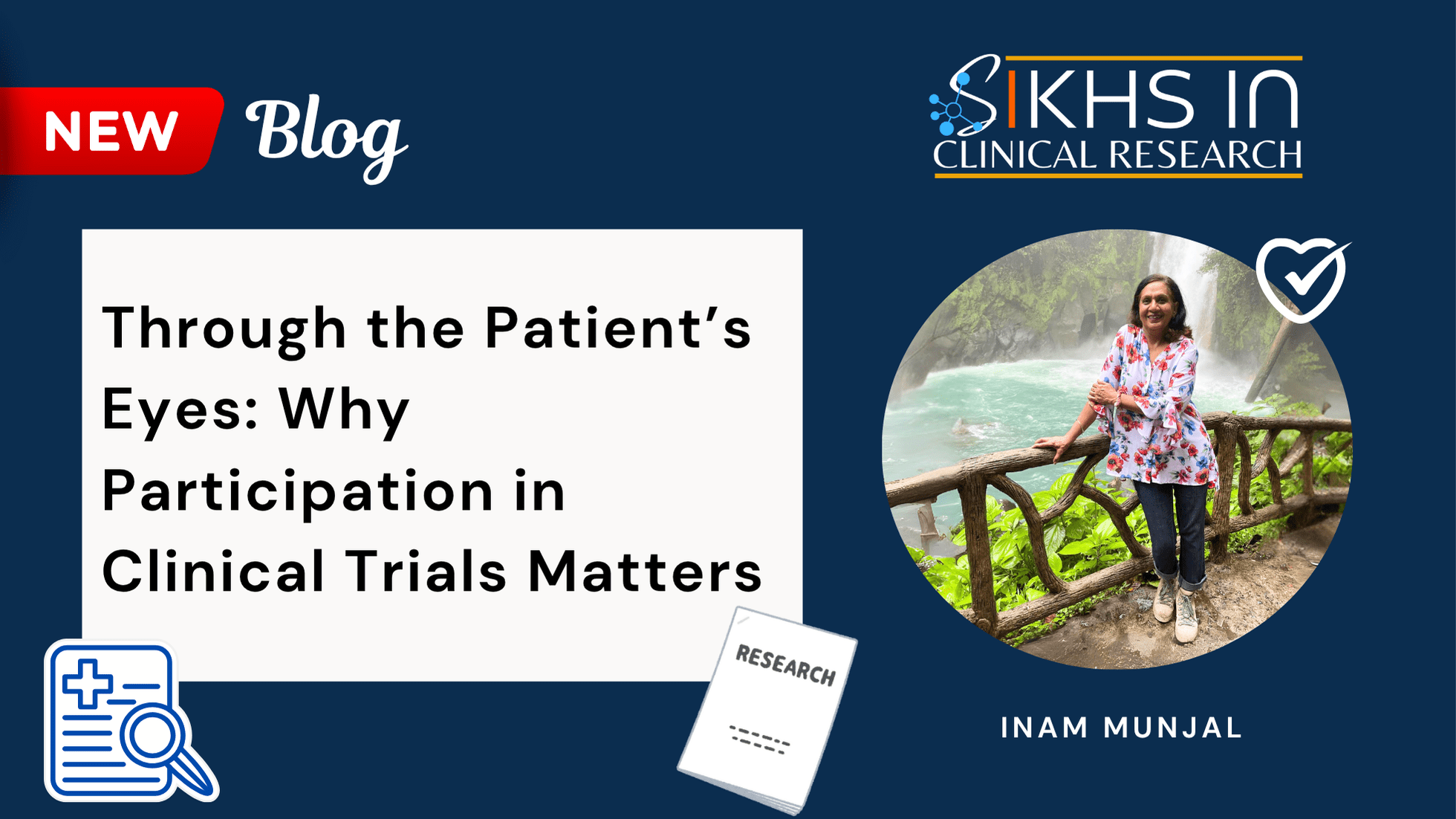
Clinical trials are the backbone of medical advancement. Behind every promising new therapy is a patient who made a choice to contribute not just to their own health, but to the health of future generations. This is the often overlooked story: the patient perspective on participating in clinical trials. From a patient’s point of view, the decision to join a clinical trial can be deeply personal and complex.
Some of the most common motivators include:
• Hope for better treatment
• Altruism and contribution to science
• Close monitoring and care
• Empowerment
Barriers that patients face:
• Lack of awareness or information
• Geographic and financial challenges
• Fear and uncertainty
• Language and cultural differences
I was visiting Vanderbilt University Medical center, Nashville, TN, for my medical checkup four years after I had completed treatment for lymphoma when I saw a poster in the hallway that read: “Looking for participants for a memory loss and Alzheimer's clinical trial.”
As a biochemist/scientist by training, I was aware of clinical trials and the necessity of human volunteers and participation but hadn’t ever personally participated in any studies. I was unsure—hopeful, curious and a little scared but thought of moving forward anyway. As I had time now, and I wanted to contribute to science, I was motivated to explore this area of research which is affecting a huge population of our seniors in the Punjabi/Sikh community. I thought that I am getting a chance to contribute to something bigger than myself, and to possibly find some answers to a growing problem affecting our seniors.
I reached out to the office and called the number listed. The process started with phone call interviews, followed by my visits to their office, where they spent time explaining the project and its goals as well as what would be required of me and the timeline if I agreed to participate. This was part of the informed consent process, which is required for any clinical trial.
I agreed to future appointments, hospital visits for tests and scans and follow ups. Having some experience in medicine, I was not afraid to go through some of the tests like brain CT scan, echocardiogram, and lumbar puncture that were part of this study. Every time I came into their office for any test, their staff helped me with parking and escorted me to the right building, offered refreshments and I was treated with utmost respect everywhere, whether it was the offices or the hospital. I was called in if there were any abnormal findings in any test results, which was an added perk - a few free tests to keep myself aware of my own health. I was also compensated fairly for my time to participate in this study.
Finally participation in clinical trials is more than a medical question—It’s an act of trust, courage and contribution and I would encourage and inspire fellow Sikhs to think about as a service to the community. This is a great way to self-educate ourselves, take a leadership role for our own health, and contribute to improving the health of our community. During this trial period, I learned that I am braver than I thought. That medicine isn’t just about pills or procedures —it’s about people, trust, and trials. And that sometimes, stepping into the unknown is how progress is made. If we don’t participate, how can we expect that the medicine we are prescribed and treated with to be the best suited to our community?