Cultural Competency Training for Caring Sikh Patients
Equip healthcare professionals with the cultural knowledge and practical tools to provide respectful, inclusive and patient-centered care for Sikh patients.
Cultural Understanding Makes a Difference
Understanding a patient's cultural background can help healthcare teams build trust, communicate more effectively and create a more comfortable care experience. Our Sikh-focused training supports healthcare professionals in recognizing cultural considerations while respecting each patient's individual beliefs, preferences and needs.
What Your Team Will Learn
Explore six learning areas designed to strengthen cultural awareness and support respectful interactions with Sikh patients.
Sikh Articles of Faith
Understand the five articles of faith, their significance and relevant considerations in healthcare settings.
Language Access
Explore effective communication with Punjabi-speaking patients and the appropriate use of qualified interpreter services.
Medicinal Considerations
Discuss traditional remedies, medication use and respectful conversations about possible interactions with prescribed treatments.
Cultural Sensitivities
Learn about respectful interactions, personal space, gender preferences, religious practices and patient dignity.
Dietary Considerations
Recognize varied dietary practices, vegetarian preferences and the importance of asking patients about individual needs.
Emotional & Spiritual Support
Incorporate compassion, spiritual sensitivity and patient preferences into supportive care conversations.
Training Formats & Resources
Choose learning formats that best suit your healthcare team's schedule and educational needs.
Learning Material Examples
Explore sample educational videos that support cultural awareness and practical learning for healthcare professionals.
Cultural Competency Training & Learn About the Sikh Faith

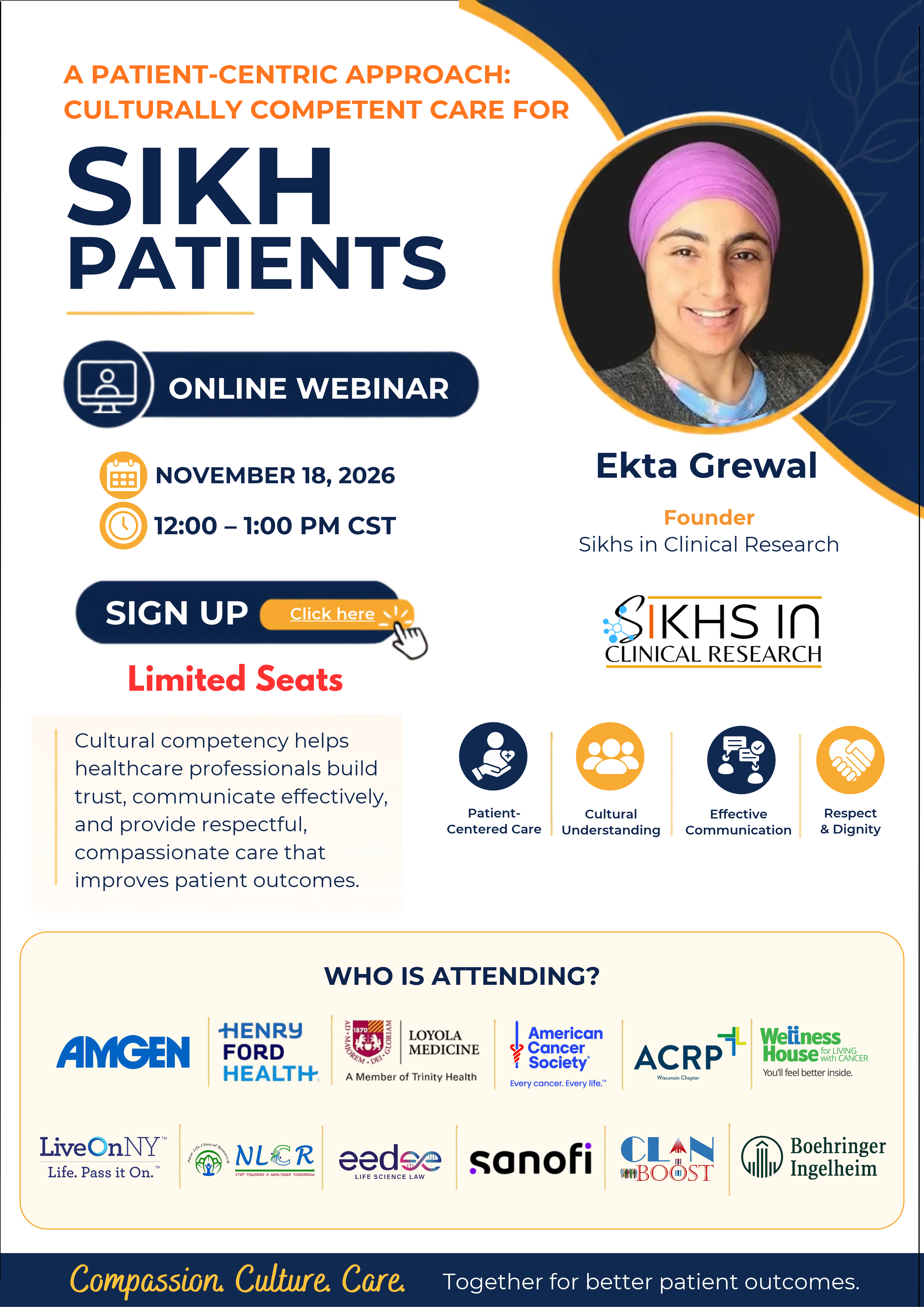
Bring Cultural Competency Training to Your Team
Partner with Sikhs in Clinical Research to support cultural awareness, meaningful patient communication and more inclusive healthcare experiences.