The Sikh community across the United States represents a vibrant and growing population, estimated to be more than half a million, spread across different states. Many are first- or second-generation immigrants whose cultural, linguistic, and religious identities play a role in their health, decision-making, and interactions with the healthcare system.
Despite the size and visibility of the community, there remains a gap in available health data specific to the Sikh community in the U.S. Since 2022, SICR has hosted more than 50 culturally grounded community engagement events across 15+ states, connecting with elders, parents, young adults, and families.
More recently, through these on-the-ground efforts, we began conducting health surveys and creating open conversations about health within the community.
Every conversation carried its own meaning. Behind each face was a story, a health struggle quietly endured, or a hope for better care for themselves or a loved one. The surveys helped us understand the disease types most affecting the community, and where more education, awareness, representation, and support are needed. The data offers insights that can help health systems and researchers recognize where targeted interventions are most urgently needed.
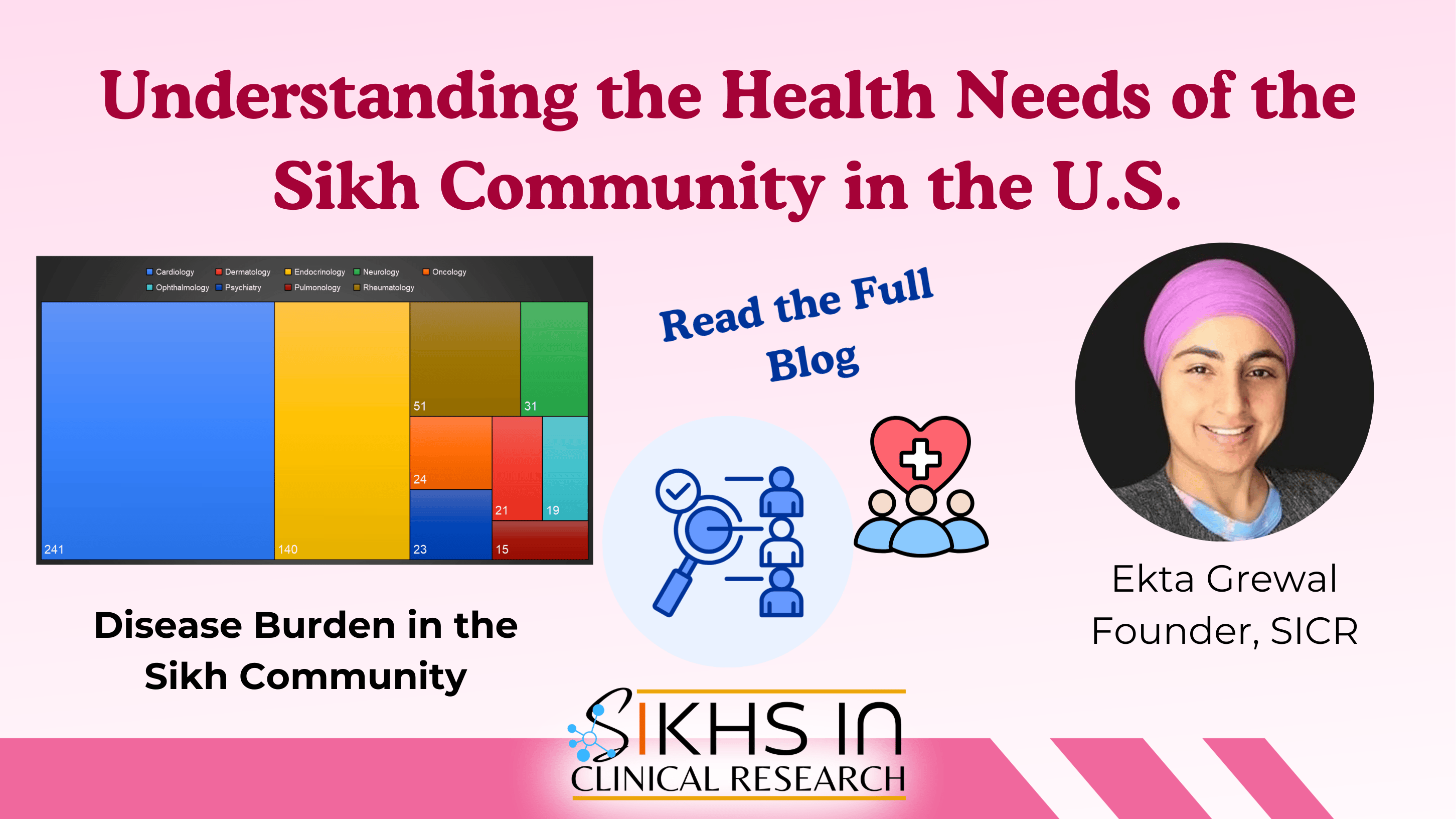
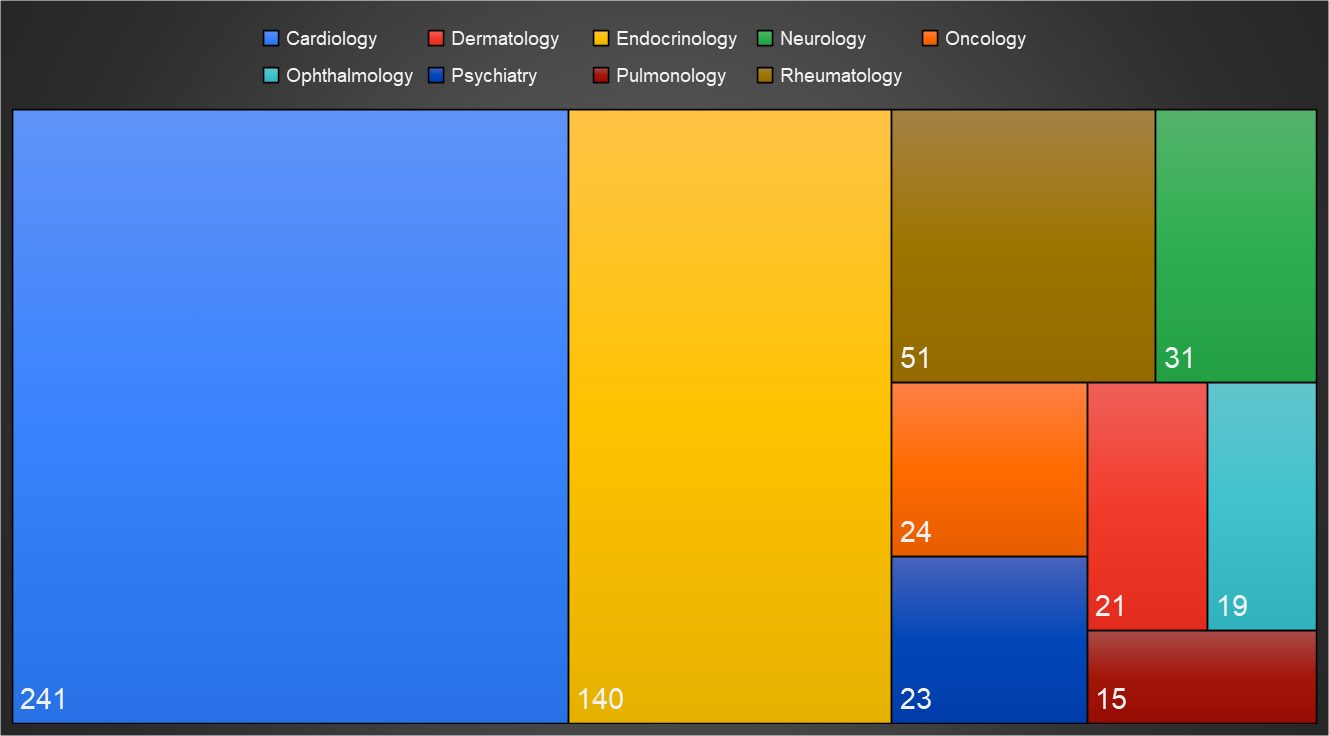
Disease Burden in the Sikh Community
Cardiology - Cardiovascular conditions have emerged as a central health concern within the community. These include hypertension, heart attack, stroke, and chest pain, with hypertension being the most commonly reported. Survey data revealed that 241 out of 400 individuals reported having a cardiovascular condition. A recent blog published by Sikhs in Clinical Research highlighted that available evidence suggests the Sikh population, similar to other South Asian groups, is at high risk for cardiovascular disease due to a combination of traditional and unique risk factors, including central adiposity, dietary patterns, physical inactivity, and genetic predispositions [1].
Endocrinology — Similarly, endocrinological conditions were highly prevalent, affecting 140 of the 400 individuals, with diabetes and cholesterol accounting for the majority of these cases. Both Type 1 and Type 2 diabetes were observed within the community, however, Type 2 diabetes was significantly more common. A recent blog published by Sikhs in Clinical Research (SICR) on diabetes highlights multiple studies identifying the complex factors contributing to this elevated risk. Genome-wide association studies have identified specific genetic loci associated with Type 2 diabetes in Sikhs. The blog also emphasizes the role of social and environmental barriers, particularly among immigrant Sikh communities. Language barriers, cultural stigma, and occupational constraints often limit access to preventive healthcare. Additionally, many Sikh men work in physically demanding occupations that can lead to sedentary lifestyles, high stress levels, and poor dietary habits, all of which increase diabetes risk. Compounding these challenges, many individuals remain unaware of their diabetes status due to missed medical visits and limited access to routine health screenings, resulting in late-stage diagnoses and more severe health complications [2]. Moreover, thyroid disorders and vitamin D deficiency were also commonly seen in the survey data.
Rheumatology- Rheumatologic conditions, including arthritis and chronic knee pain, were also reported in the community, affecting 51 of the 400 individuals, with a higher prevalence among Sikh women. Insights highlighted in a blog published by Sikhs in Clinical Research (SICR) suggest that cultural barriers further increase the burden of conditions like arthritis [3].
Neurology and Psychiatry- Neurological and psychiatric conditions were also notable within the community. Neurological disorders, including Alzheimer’s, Parkinson’s, dementia, migraine, ALS (Amyotrophic Lateral Sclerosis), multiple sclerosis, and autism (31 out of 400 individuals), and psychiatric conditions, such as depression, brain trauma, schizophrenia, and addiction (23 out of 400 individuals), were observed.
Oncology- The incidence of cancer is rising, and the Sikh community is no exception. The survey identified cases of breast, prostate, thyroid, stomach, pancreatic, ovarian, and colorectal cancers (24 out of 400 individuals).
A recent blog published by Sikhs in Clinical Research (SICR) on breast cancer further highlights that both genetic and environmental factors contribute to this increasing burden. Identified genetic risk includes the GG genotype of the MCP-1-2518 A/G polymorphism, while environmental factors such as obesity, reduced physical activity, and dietary shifts away from traditional plant-based, home-cooked meals have also been associated with increased prevalence [4]. In some responses, participants reported cancer without specifying the type.
Dermatology- Skin conditions, including atopic dermatitis and vitiligo, were observed in 21 out of 400 individuals.
Ophthalmology- Eye conditions, including glaucoma, cataract, and reduced vision, were reported in 19 out of 400 individuals.
Pulmonology- Respiratory conditions such as pneumonia, chronic obstructive pulmonary disease (COPD), and asthma were also seen (15 out of 400 individuals).
Additional findings in the survey included gastroenterology and hepatology conditions like constipation, bloating, fatty liver, and Wilson’s disease; hematology concerns such as anemia and thalassemia minor; immunology issues like urticaria and gluten allergy; and orthopedic problems, including neck and ankle pain, heel bone outgrowth, and scoliosis.
This data reveals more than just numbers, it highlights a deeper truth about how diseases show up in the Sikh community. Health conditions do not impact all populations in the same way. Genetics, cultural lifestyle, dietary habits, environmental exposures, and family history all play a role. Without accurate representation in research data, these differences go unrecognized and untreated.
Awareness Campaign Outcomes
Recently, Sikhs in Clinical Research (SICR) conducted awareness campaigns for breast cancer and diabetes during October and November 2025, coinciding with Breast Cancer Awareness Month and Diabetes Awareness Month. During these events, community members completed disease-specific surveys, providing valuable insights.
Diabetes Awareness Survey Results
The data revealed that diabetes is prevalent among both men and women, with the majority of affected individuals aged 45 years and older, though cases were also observed in younger individuals, highlighting early risk within the community. A strong family history of diabetes was common among those diagnosed, underscoring genetic and shared lifestyle influences (75%). When asked about screening and check-ups, only a portion of participants (42%) reported checking their blood sugar at home, and half of the individuals (50%) indicated that they underwent regular diabetes screening. However, following education on diabetes prevention and the importance of A1C/glucose screening, there was a noticeable increase in participants (92%) expressing willingness to pursue regular screenings in the future. Several individuals (50%) also reported experiencing diabetes-related complications, including issues affecting vision, nerves, and overall health. Although many individuals (50%) already knew that maintaining a healthy lifestyle, such as eating a healthy diet, exercising regularly, and limiting alcohol consumption, reduces the risk of diabetes, the remaining 50% reported that they learned this information during the event. These findings reinforce the importance of continued community-based education, including early screenings to support timely diagnosis, prevention, and better long-term health outcomes.
Breast Cancer Awareness Survey Results
Breast cancer awareness was conducted among women who completed the survey, with participants ranging in age from 31 to 60 years. Analysis of the completed surveys indicates that the event positively influenced participants’ awareness and understanding of breast cancer prevention and early detection. While some participants reported prior knowledge of mammograms, breast self-examinations, and risk factors such as family history, many indicated learning new information through the event. Participants also demonstrated improved understanding of how lifestyle factors, including a healthy diet, regular physical activity, limiting alcohol consumption, and avoiding smoking, can reduce breast cancer risk. Importantly, respondents (100% of the women aged more than 40) expressed increased willingness to pursue mammograms and perform regular self-examinations (100%) following the event, suggesting a meaningful shift toward proactive health behaviors.
Sikhs in Clinical Research (SICR) has been amplifying patient voices through patient perspective videos, which provided an opportunity to interview breast cancer survivors and hear powerful, firsthand reflections on their healthcare journeys.
“You have to be your own advocate. It’s your body.” - Lilly Kaur
“None of my doctors ever told me that a clinical research option exists. I would love to participate in it.” - Jasbir Kaur
It is important to note that these findings are based on a limited number of respondents. Not all community members completed the surveys, and participation varied across events. As such, while these results provide meaningful insights into health needs, they should be interpreted as indicative rather than comprehensive. Ongoing efforts need to be continued to engage more individuals to capture a bigger picture of the health needs of the Sikh Community in the U.S.
From Data to Action
Disease awareness and health literacy remain central priorities of SICR. Providing simple, accessible education about symptoms, prevention, and early screening encourages individuals to take proactive steps in their health journeys. When people feel informed, they are far better equipped to make decisions that benefit themselves and their loved ones.
Many Sikh patients, particularly elders, face language and cultural barriers when accessing healthcare. To address this gap, Sikhs in Clinical Research (SICR) has created healthcare resources in the Sikhs Native language, Punjabi, ensuring patients can understand, ask informed questions, and feel confident in their care. SICR has also developed a Sikh Patient Guide for Healthcare Workers, designed to help providers better understand the Sikh faith, values, and practices, so they can deliver culturally competent care and be able to build trust with the Sikh Community.
Our goal is simple, but the need is great: to reach more people and improve health outcomes for all. The number of individuals who need this support is large, and we cannot do it alone. More resources, stronger partnerships, and collective commitment are essential. This is our call to industry partners, healthcare leaders, researchers, and all who believe in equity: let’s come together. Together, we can build trust, expand access, and ensure no community is left behind in healthcare.
References:
[4]Breast Cancer: A Growing Health Concern - Sikhs in Clinical Research